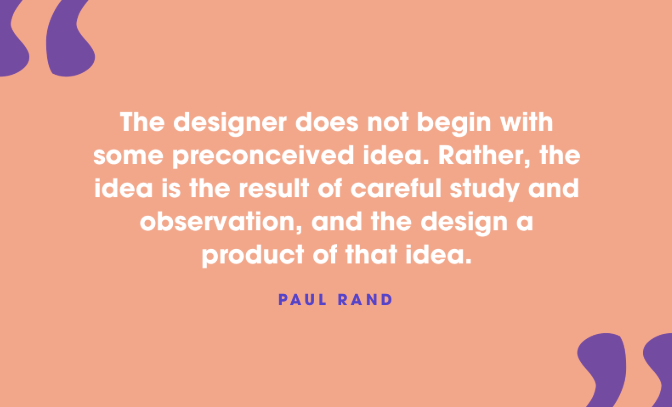
Source for design quote: Esanu, Eugen. “35 Quotes on Design That Will Fuel Up Your Creativity”.
Introduction
In this section of the course, there has been great emphasis on the role of the teacher-librarian as the liaison between several people and procedures in the promotion of openly accessible reference services. It feels a bit like Atlas with the world on his shoulders at times, when looking at the various responsibilities of the teacher-librarian. We are the gatekeepers in a world of often insurmountable information, responsible for providing the best reference services for our students (and no, it is not lost on me that the story of Atlas holding the earth is actually a misinterpretation of the story – he is commanded to hold the sky, not the earth).

However, the focus has also been on the process, and the importance of working well with the resources available. Thus, the evaluation of successful reference services is dynamic and a continuous work-in-progress, where collaboration with staff, administrators, and the community is key. In this reflection on Theme 2: Managing and Evaluating Reference Services, I will analyze ideas under two sections. First, The Personal side, which addresses communication and leadership skills; second, The Administrative side, which includes evaluation and design.
The Personal
In Lesson 5, we learned about The Reference Interview, which focused primarily on the relationship between the teacher-librarian and the student. Riedling defines the Reference Interview as “fundamentally a conversation […] for the purpose of clarifying the student’s needs and aiding in meeting those needs” (99). Therefore, personal communication skills are paramount to a successful teacher-librarian. Riedling outlines success as the process of working with the student, where the goal is not to find the information, but to “foster the student’s information literacy skills for socially responsible, lifelong learning” (104). She believes that the overall, personal impression of the student – that their request was heard and they were given respectful attention and time – is the most significant part of the Reference Interview. Diplomacy is not only necessary for students, but also with teachers; staff may not have communicated assignment expectations with the teacher-librarian, so approaching teachers in a kind, respectful way is important to build rapport and community in the school.
The online article “6 Communication Skills That Will Make You a Better Leader“ from Success Magazine in 2017 clearly presents ways to improve your communication with others:
- Know yourself
- Know your audience
- Be direct, specific, and clear
- Pay attention to nonverbal communication
- Listen more than you speak
- Be positive and respectful
Riedling addresses all of these at some point in her explanation of the Reference Interview, focusing on how personal knowledge and interpersonal skills are needed to be successful. I really identified with Riedling’s notion that “the deepest principle of human nature […] is the desire to be appreciated” (100), which cannot occur without respect and positive guidance. Keeping this principle in mind as a teacher-librarian will help alleviate some of the fears or avoid misinterpretations in the interview process (101), and also help students move more quickly through uncertainty as outlined in Carol Kuhlthau’s Task Initiation stage (11). I think it is easy to forget how daunting it can be for children or teenagers to ask an adult for guidance, even in a safe school setting like the library. Once a positive foundation is built, students will feel more connected to the learning commons; not only will they return to seek guidance, but ideally, they will promote the library to others.
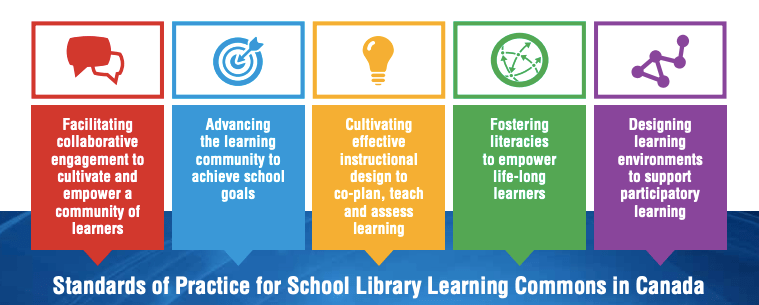
These 6 skills outlined in Success Magazine apply not only to the Reference Interview with students, but also to the role of the teacher-librarian in general, as a leader in both the school and larger communities. In the Canadian Library Association Leading Learning: Standards of Practice for School Library Learning Commons in Canada, several standards address the collaborative role of the teacher-librarian with all levels of staff within the school. For example, in “Advancing the Learning Community to achieve student goals”, the teacher-librarian works with principals, teachers, support staff, and district administration. In the standard “Cultivating Effective Instructional Design to Co-plan, Teach and Assess Learning”, the rubric outlines leadership responsibilities for instruction and inquiry at both the staff and student levels. Meanwhile, according to the role description of the teacher-librarian in the Greater Victoria School District, one must: “participate[] in an information network with district schools, the District Resource Centre, the public library and information agencies” and “seek[] opportunities for personal growth in school librarianship and participat[e] in collegial networks” (Mueller Lesson 6). Without proper communication skills, the teacher-librarian cannot be successful as a role model, collaborator, and leader in these networks.
The Administrator, Evaluator, and Interior Designer
Another large component of the teacher-librarians role is as an administrator and evaluator of resources, reference services, and ultimately, the use of library space. This presents itself through strategies such as taking surveys and collecting data to evaluate “the use of reference materials”, and the “‘satisfaction’ levels of students and teachers” (Mueller Lesson 7). It also means removing references that are no longer relevant, in an ongoing process of culling and re-evaluating.
This connects to the idea that efficient use of the library media commons space is an essential part of running a successful program. It is now viewed as a “flexible and shared physical and virtual space filled with users engaged in a variety of social and educational activities” (Riedling 117). Spaces need to be balanced between quiet study and collaborative work areas, in addition to providing open access to references and technology to promote information literacy. There should be a fluidity and comfort in the space to make it welcoming and user-friendly.
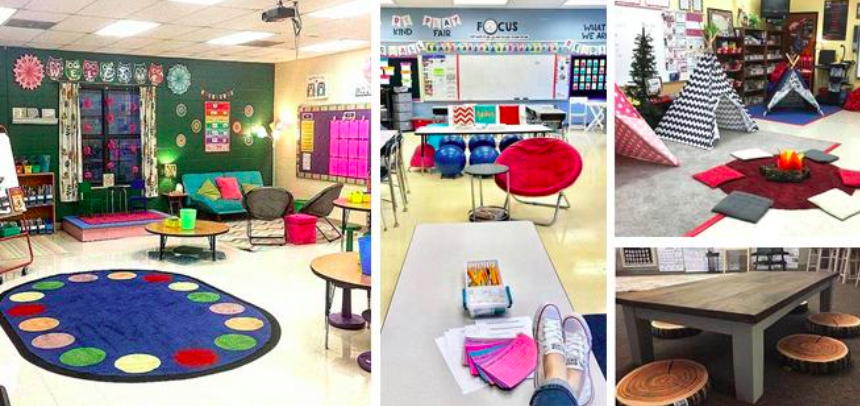
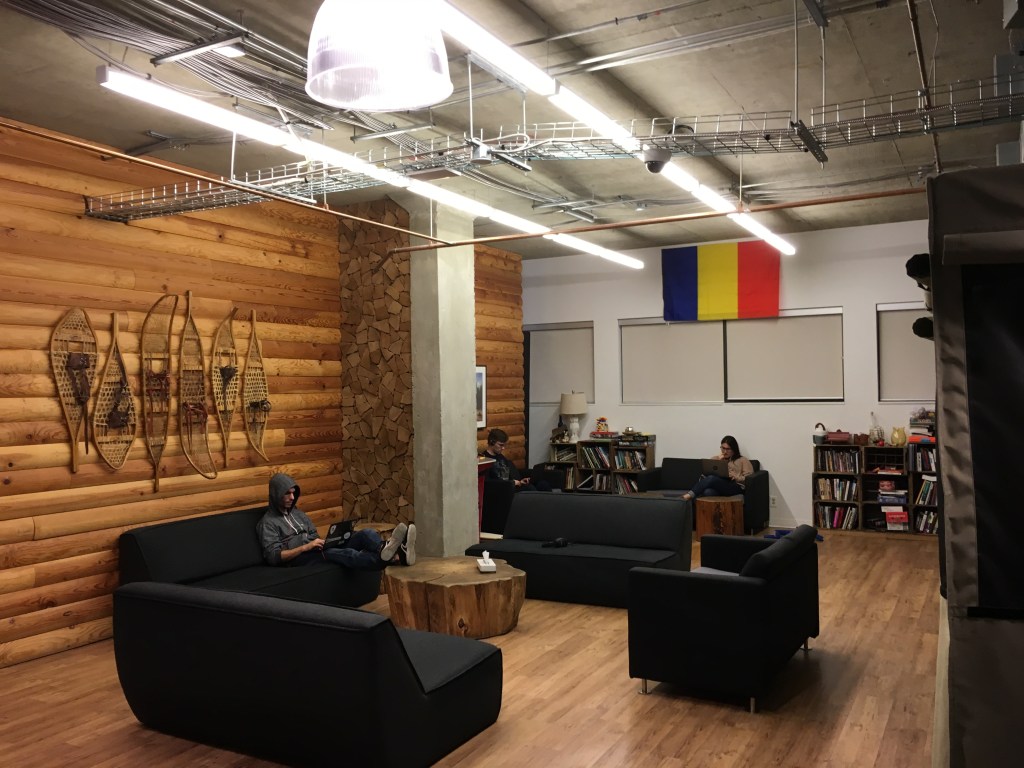
Flexible and alternative seating have become trendy in many learning spaces in recent years, where educators have realized that not one size fits all. In 2017-2018, I worked on an Innovation Grant team, where we researched and purchased new furniture, lighting, and other decorative elements to make the classroom more comfortable and inviting. We visited other schools and workplaces, including Hootsuite, to learn about how flexible work spaces encourage collaboration and creativity. When our students were surveyed on the benefits of the new arrangement, many stated that it was the welcoming atmosphere that impacted them the most positively as learners. They looked forward to coming to that class. Ideally, this is how students would feel coming into a school library learning commons, and this would promote loyalty and a desire to be part of the information community.
Similarly, a modern and well-organized space helps with the promotion of materials and open access needed for “effective reference services” (Mueller Lesson 7). Due to the cost and significance of references in the development of information literate citizens, it is imperative that these resources are used both frequently and easily. This requires access at several levels: Intellectual, Physical, and Digital (Mueller). All of these entry points amount to the best access for the widest audience; this is the ultimate goal for teacher-librarians.
Conclusion
Through personal growth, knowledge of student and staff needs, professional development, and attention to standards, I hope I will succeed in many of the leadership expectations of the teacher-librarian. Although we may not always reach the gold standard of Achieving Information Literacy’s Exemplary library collections (26), I am confident that our school library uses our collection “as effectively as possible” and that our students feel “accomodat[ed according to] their varied interests, experiences, [and] learning styles” (Mueller Lesson 7). And that much of our success is found in the process of making connections, learning new information, and working through challenges. It is no longer Atlas carrying the sky on his own, but rather a group of people holding the world of information together.
Works Cited
Asselin, Marlene et al. Achieving Information Literacy: Standards for School Library Programs in Canada. Canadian Association for School Libraries, 2006. http://accessola2.com/SLIC-Site/slic/ail110217.pdf
CLA. Leading Learning: Standards of Practice for School Library Learning Commons in Canada. Canadian Library Association, 2014.
Esanu, Eugen. “35 Quotes on Design That Will Fuel Up Your Creativity”. Medium. https://blog.prototypr.io/35-quotes-on-design-that-will-fuel-up-your-creativity-15060f732f1 Accessed 19 February 2020.
Mueller, Aaron. “Lesson 6: Managing the Reference Collection”. LIBE-467-63C, University of British Columbia, 2020.
Mueller, Aaron. “Lesson 7: Evaluating Reference Services”. LIBE-467-63C, University of British Columbia, 2020.
Riedling, Ann Marlow, et al. Reference Skills for the School Librarian: Tools & Tips, Third Edition. Santa Barbara, Linworth, 2013.
Scalco, Dan. “6 Communication Skills That Will Make You a Better Leader”. Success Magazine, May 1, 2017. https://www.success.com/6-communication-skills-that-will-make-you-a-better-leader/ Accessed 19 February 2020.
“Top 10 Benefits of a Flexible-Seating Classroom.” Education Trend, Smith System, 2020. https://smithsystem.com/smithfiles/2019/05/21/top-10-benefits-flexible-seating-classroom/ Accessed 19 February 2020.
“16 Awesome Flexible-Seating Classrooms That’ll Blow Your Teacher Mind”. Bored Teachers: Celebrating Educators Everyday. 2020. https://www.boredteachers.com/classroom-ideas/16-awesome-flexible-seating-classrooms-thatll-blow-your-teacher-mind Accessed 19 February 2020.
 LIBE Diploma Blog 2020
Well done reflection! Your review was organized into two very useful categories, the Personal and the Administrative. I appreciated this distinction, as it allowed you to explore and share your learning in this last theme through a very authentic and practical lens. Your highlights, discussions, explanations and analogies were all very well chosen and demonstrative of deep thinking about our topics, approaches, roles and resources. This was a well researched and cited reflection that shares your learning very effectively.
LikeLike
Hi Sophie,
I like your analogy about Atlas because it makes complete sense. I felt like I was offering so many resources to patrons and then since taking this course I realize there is so much more I could be offering! “The six communication skills that will make you a better leader” list is also very helpful; this is the perfect time for me to see this and I am going to try it out right away and share it with others!
LikeLike
Glad you were able to connect with some of the ideas in the post! Thanks for the comment!
LikeLike