
Source for feature image: Tatiana Gulyaeva
Introduction
“‘The half of knowledge is knowing where to find it’”
(qtd. in Riedling 3)
Reference areas are significant in the development of information literacy at all levels in our schools. Research shows that “student achievement is linked with the library programs promoting effective use of reference and information services” (Riedling 4). In West Vancouver, the teacher-librarians show dedicated leadership in successful reference services, exhibiting expertise in all three areas as outlined by Ann Riedling in Reference Skills for the School Librarian:
- knowledge of the library media collection, electronic information resources, and tools
- effective conversational skills (communication)
- competence in selecting, acquiring, and evaluating resources to meet students’ needs (Riedling 4)
I have witnessed this first-hand as a teacher, and also as a diploma candidate in the LIBE program at UBC, where I am continually seeking guidance from these experts.
However, our school library does not currently have a dedicated reference area. The teacher-librarians have recognized this as needing significant improvement and are committed to changing this over the next few years. According to the Canadian Library Association, modern school libraries “should be contextually relevant to student need and success, and built, cared for, measured, renewed and sustained on an ongoing basis by their learning communities” (4).
Presently, there are several reference texts in our collection that are shelved with other non-fiction texts. In addition, there is 8-10 ft of low shelving with separate reference sources, but these are hard to see and often encumbered by student seating. The reference shelves include a handful of encyclopedias; thematic, historical, and general atlases; and dictionaries and thesauri. This organization of reference sources is recognized as “[t]he middle road on [the] argument” of reference storage, which is “to integrate some references and to also keep a separate collection” (Mueller Lesson 6). Thus, the overall concept at our library does not need to change, it just needs a bit of tweaking.
Given the high cost of reference sources, it is important to provide a designated space for students to engage with both print and digital sources. Our student population is full of curious, intellectual students who are fascinated by various historical and contemporary topics.
According to the Standards of Practice published by the Canadian Library Association in 2014, in a Library Learning Commons, “Inquiry [and] project/problem-based learning experiences are designed as catalysts for intellectual engagement with information, ideas, thinking, and dialogue” (5). What better place to develop inquiry and project-based learning than in reference services? Why not pique student interest in something new by having a devoted reference area with clear signage, displays of great reference works, comfortable seating, and easy access to digital sources?
We can do this by transforming the library computer lab, which does not have enough computers to host a full class, into a reference area, an idea conceived by our current teacher-librarian. We briefly discussed the use of shelving, retention of some computers, and new seating, which I will examine more thoroughly in my evaluation criteria for strong reference services.
As Riedling says, “‘Inquiring minds want to know the correct information quickly’” (3). Not only will we maximize use of space by converting the underused computer lab to a separate work area in the library, but we will also be highlighting how to best use reference sources to help students become information literate citizens.
Evaluation Criteria for Strong Reference Services
As we evaluate our current reference services and examine other options, it is important to establish a criteria. These have been applied in Figure 1, “Reference Services Redesign” created to update the reference area in our school library.
- Accessibility and Layout: references are easy to access by students via appropriate signage and shelving; instructions for reference use are clear and permanent (use of posters and electronic instructions that can be accessed at home); there is sufficient space and options to work with different print or digital resources; there is an area that can be used for the reference interview.
- Aesthetics and Comfort: design/access to information is not overwhelming; references are put on display to highlight myriad of information and artistry; workspace is appealing to students; seating is comfortable and provides options to sit or stand, work alone or individually.
- Variety and Currency of Sources: this includes both print and electronic sources, with a heavier focus on the latter; there is a variety of references for both print and electronic, based on student and staff needs; sources are kept up-to-date where necessary.
Figure 1: Reference Services Redesign
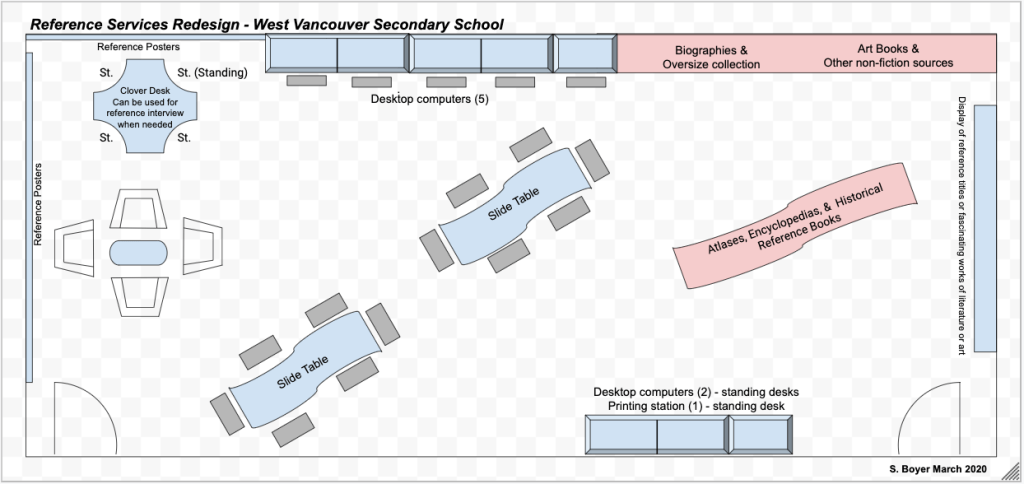
Accessibility and Layout
One of the two basic functions of library media centre services is to provide “instruction or guidance in the use of information sources” (Riedling 5). Although much of this is done through traditional teaching, we are aiming to foster independence in students. In fact, two of the Common Core Standards for college and career readiness in the United States are for students to: “demonstrate independence” and “use technology and media strategically and capably” (9). The BCTLA Points of Inquiry document echoes this idea and states that “[c]ommitted 21st Century educators […] move to the side and work to guide or ‘scaffold’ the learning [and] encourage students to have more authority over their own knowledge and inquiry” (5).
Our current teacher-librarians do an expert job of modelling proper resource use and providing clear instructions or pathways for students to successfully use reference databases at home. However, this caters towards students who are already very organized, as the database passwords are provided on a bookmark-sized paper, which must be given by the teacher-librarian. This is in part to protect the use of databases by outside users. Although we can post passwords on Google Classroom (perhaps a one-stop post at the beginning of the school year could work for this), this requires that a student remember where to locate the information.
Whether we like it or not, many students are more likely to take a photo of instructions with their phone than remember they have a paper with passwords. Having clear, permanent instructions on desktops or on the wall for students to follow in the reference area will help achieve this goal. For example, a poster that explains how to log in and use Noodle Tools; a step-by-step guide on how to get to the library’s database access online (including passwords); or some rules to follow when determining whether a source is reliable.
On their library website, West Vancouver School District provides videos on reference use and other instructions on how to use Noodle Tools. This is excellent information to provide to students who need guidance outside of school hours; however, promotion of these tools within the school and classroom is needed.
Every September, the teacher-librarians present their range of services to staff. After this presentation, perhaps 10 minutes could be devoted to teachers coming together to brainstorm ideas on use of specific references in their lesson planning, in an effort to promote more resource use. There are so many great connections to most of the courses in our curriculum, and I was surprised to hear that some teachers do not use reference services at all. Creating a poster with ideas provided by the staff, and posting it in the reference area, would help foster creativity in other staff members and the student body.
For instance, when I read that almanacs contain “historical events over the course of a calendar year; sports records; scientific achievements and discoveries; [and] key news events of the year”, I thought What a perfect place to find historical, accurate information to get ideas for a fictional story in Creative Writing 10. However, the almanac is only on my radar because of learning in an outside course, and I would recommend promoting and purchasing almanacs to be used in humanities and other course work in our high school.
Regarding layout, signage for different references should be visible and engaging for students. In this way, they can continue to practice independent learning by accessing knowledge themselves. There is currently no clear signage for the reference sources in our library. I would suggest including enough shelving in the new reference area (and accompanying signs) for the following resources:
- Biographies (always popular with students)
- Atlases (general, thematic, subject)
- Encyclopedias (subject)
- Historical Reference books (including IB World History)
- Art books
- Other non-fiction sources (such as almanacs)
In terms of seating, I would suggest a combination of standing desks and tables with seating. In addition, students should be able to choose whether they want to work independently or in a group. Some of the sitting/standing areas will include repurposed desktop computers; there should also be a printing station if students want to print off articles or text from databases or other reference sites.
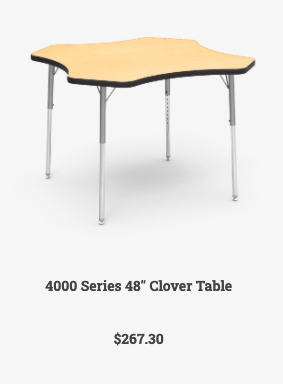
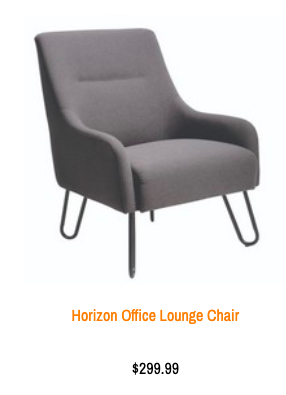
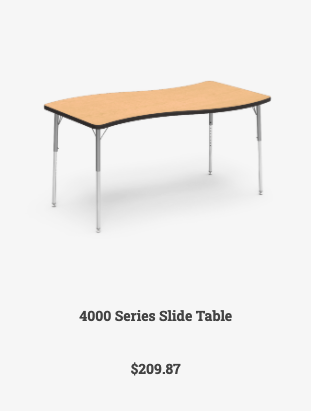
There should be a quieter area, shown in the northwest corner of Figure 1: Reference Redesign, for reference interviews (Riedling 93). Four club chairs with a low table would provide comfortable seating for more casual reading (as students choose reference topics) or laptop use. Each seating area should have easy access to electrical outlets for laptop charging. The room is easy to navigate, with enough space to find resources, work comfortably, and move unencumbered and “barrier-free”, which is one of the exemplary standards for accessibility outlined in Achieving Information Literacy (39). Overall, we want to create a reference space where students want to spend time, and guide them to new resources through visual aids, such as posters and proper signage.
Aesthetics and Comfort
The Achieving Information Literacy document published by the Canadian Association for School Libraries states as its first outcome that students use “information with aesthetic appreciation”, such as recognizing the value in “various forms of creative and scientific expression” (10). In addition, one of the four main goals of the AASL Standards for Learners is to “[p]ursue personal and aesthetic growth” (Riedling 9).
As teacher-librarians we can highlight the aesthetics in print references through thoughtful displays; having open books either in display cases or on top of shelving helps to attract students to the sources. In fact, Riedling opens Chapter 7 with the statement: “Geographical reference sources can be thought of as works of art” (79). I agree with Riedling whole heartedly, and also believe that other references, particularly modern ones such as the Indigenous Peoples Atlas of Canada, can be viewed in the same way.
At our school in particular, I would add art books to the reference section, since we have 4 or 5 shelves worth in our existing collection. Many art books are biographical, plus they could be displayed in a central way to be appreciated more often and by a larger audience. There is also the shelf space available since our print reference collection is somewhat small.

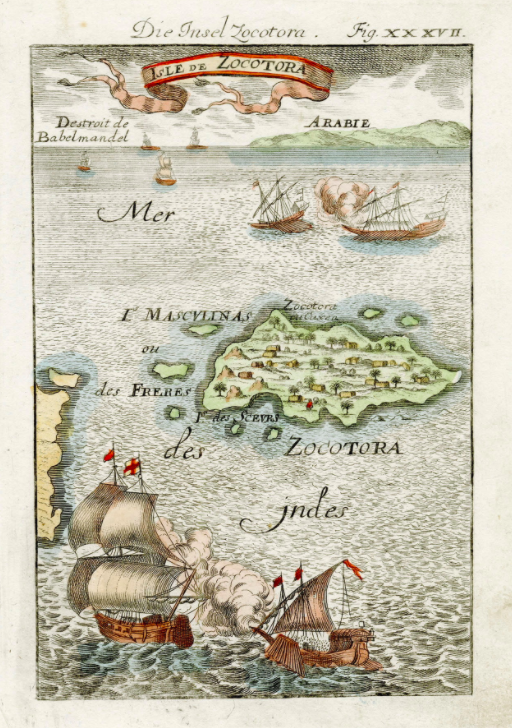
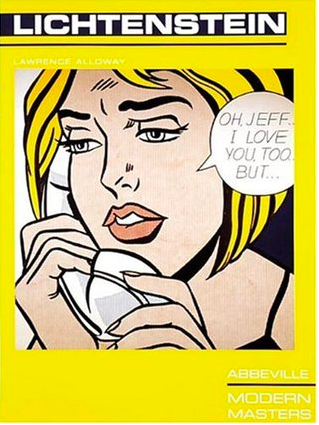
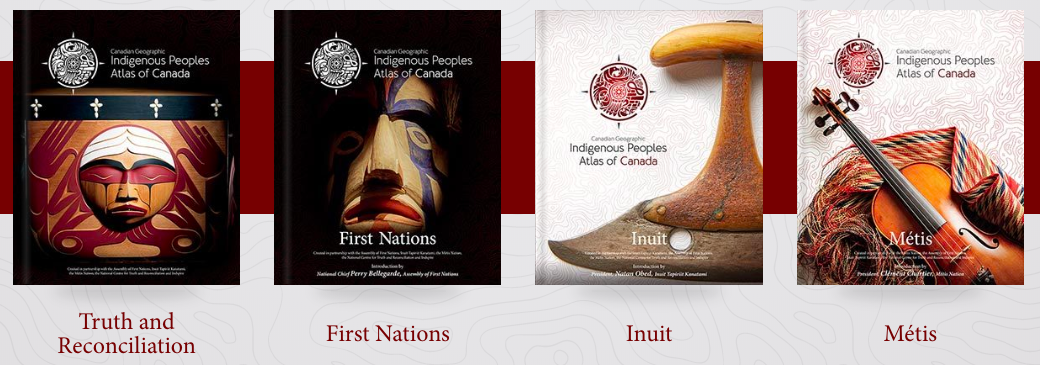
In Eisenberg and Berkowitz’ Big6 Problem Solving Model, step four is the “Use of Information, where “Extract[ing] relevant information (requires the majority of time)” (Fig 1.5, Riedling 12). I have also found this to be the case in high school projects with a research component. Therefore, a comfortable working environment is paramount to proper reference use. This manifests as both the entirety of the space as a welcoming environment that appeals to modern tastes, but also in the variable seating arrangements that encourage collaboration and creativity. Including proper workspaces in a reference area can foster better use of sources.
Variety and Currency of Sources
Information literate citizens “make[] decisions based on accurate and current information” and “respect[] information sources and diverse perspectives” (Asselin 5). Therefore, good reference services must include both variety and currency of sources to help students achieve these skills.
Variety is defined by having access to both print and digital sources, and that these references represent a multitude of voices. In the “Collection Development Policy” developed by the West Vancouver Teacher Librarian Association (WVTLA), it states that the teacher-librarian’s responsibility is to “provide a diverse, balanced, and high-quality collection representing all points of view on controversial issues” (1). This is achieved in the district through various databases (Figure 2) that include both global and Canadian perspectives, and cover a range of subjects from literature to environmental science.
Figure 2: List of Databases, West Vancouver Secondary Learning Commons
| EBSCO | GALE |
| Explora Academic Search Premier Literary Reference Centre Poetry and Short Story Reference Centre Canadian Points of View Reference Centre Consumer Health Complete NoveList Plus GreenFILE | Global Issues in Context Science in Context Canada in Context Points to the Past |
As Canadians, we are often overshadowed by American content, so having Canadian sources, editors, and publishers is significant; in addition, as outlined in my analysis of a reference source in Assignment 1, Indigenous voices are a major component of our curriculum here. Therefore, the WVTLA’s Selection Criteria for materials includes “Canadian Content and Publication” and “Equity and Inclusiveness”, which has a section on Indigenous peoples (1-2). Based on our database access to Canadian content, and an entire shelving area dedicated to Indigenous content, our school is doing well on this front. However, I would suggest moving some of the Indigenous content to the reference area.
Retention of WVTLA’s materials is analyzed using FRESH:
F: Does it FOSTER a love of reading?
R: Does it REFLECT a diverse population?
E: Does it reflect an EQUITABLE global view?
S: Does it SUPPORT the curriculum?
H: Is it a HIGH-QUALITY text? The collection should be made up of materials that connect students and teachers to up to date and accurate information (WVTLA 3)
In regards to the last point about up-to-date information, currency for reference services really depends on the type of source. According to Riedling’s Table 2.1 (24), most references need to be replaced every five years, with the exception of historical sources.
I noticed that many of the references in our small print collection look dated, and although this does not mean we should get rid of them, I do think there is some value in having more newer encyclopedias or atlases to engage students more with print resources. As Mueller points out in Lesson 4, “The predictable layout of entries and the formal and structured arrangement of most of these print references allow for students to focus on a limited amount of information that will give them the background they require to dig deeper into a topic”.
In my own experience, purchasing e-textbooks for general Social Studies courses was costly and ineffective for student learning. Peter Greene, author of the Forbes article “Why E-Textbooks Haven’t Taken Over Schools”, explains that among other factors, “Many students would rather read paper books. Various studies over the last decade repeatedly show that students prefer to read on paper rather than a screen, that they believe they concentrate better, even that they retain information better from print formats”. Our Social Studies department has since gone back to traditional print textbooks, which are supplemented by other electronic or print documents/texts.
Similarly, I think there needs to be some investment and research into more appropriate reference sources for ELL students in order to properly “reflect” the “diverse population” of our school (WVTLA). In discussion with the department head for ELL, he told me that one of the biggest challenges is finding the content at the appropriate reading level for his students. Perhaps this could be presented as an Innovation Grant in coming years.
Timeline for Reference Services Redesign
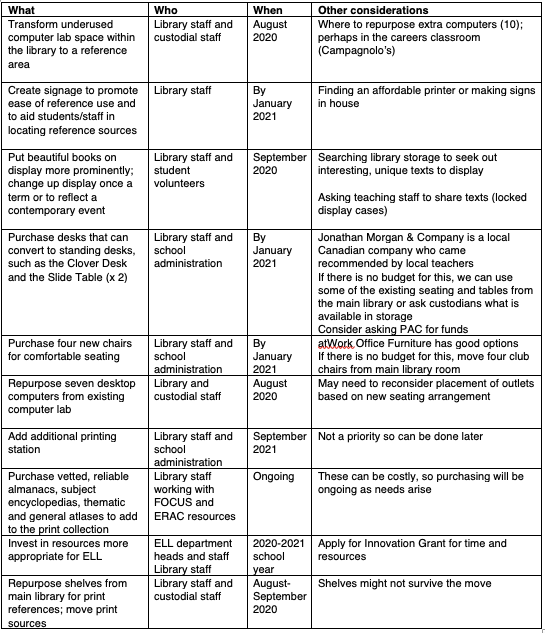
Figure 3 below outlines the suggested changes, staff involvement, and timelines for the redesign of the reference area. It also includes other considerations for the change.
Figure 3: Suggested Timeline and Implementation of Changes to Reference Area
Conclusion
Reference services in our school are run by capable experts who have chosen appropriate and wide-ranging materials to meet student needs and curriculum in our district. We have a variety of electronic sources that highlight diverse perspectives, and are working on building a print collection that achieves the same goal.
In order to get the most out of our investment in reference sources, we must consider creating a new space for students to engage with these print and digital texts. The space should be inviting, accessible, and easy to navigate for all types of learners. Highlighting reference works for their aesthetic value is an important part of engaging students in the information seeking process.
This can be achieved through teamwork at various levels in the school, and over several months and years; our timeline will truly depend on budgetary constraints. My hope is that this newly invigorated reference space will be a priority for our hardworking staff and students, our future leaders whose information literacy skills will serve them far beyond graduation.
Works Cited
Asselin, Marlene et al. Achieving Information Literacy: Standards for School Library Programs in Canada. Canadian Association for School Libraries, 2006. http://accessola2.com/SLIC-Site/slic/ail110217.pdf
BCTLA Info Lit Task Force. The Points of Inquiry: A Framework for Information Literacy and the 21st Century Learner, BCTLA, January 2011. Accessed 30 March 2020. https://bctla.ca/wp-content/uploads/2018/02/the-points-of-inquiry.pdf
Canadian Geographic Indigenous Peoples Atlas of Canada. The Royal Canadian Geographical Society, 2018. 4 vols. https://indigenouspeoplesatlasofcanada.ca/
“Citing Sources with Noodle Tools”. West Vancouver Schools Secondary Learning Commons. N.d. Accessed 30 March 2020. http://www.sd45slc.ca/citing-sources-with-noodle-tools.html
Canadian Library Association. Leading Learning: Standards of Practice for School Library Learning Commons in Canada. Canadian Library Association, 2014.
Greene, Peter. ““Why E-Textbooks Haven’t Taken Over Schools”. Forbes, 27 August 2018. Accessed 30 March 2020. https://www.forbes.com/sites/petergreene/2018/08/27/why-e-textbooks-havent-taken-over-schools/#61b112a31ddc
Mueller, Aaron. “Lesson 4: Print and/or Electronic Reference Materials”. LIBE-467-63C, University of British Columbia, 2020.
Mueller, Aaron. “Lesson 6: Managing the Reference Collection”. LIBE-467-63C, University of British Columbia, 2020.
Riedling, Ann Marlow, et al. Reference Skills for the School Librarian: Tools & Tips, Third Edition. Santa Barbara, Linworth, 2013.
WVTLA. “West Vancouver Schools Library Learning Commons – Collections Development Policy”. N.d. http://www.sd45slc.ca/uploads/2/5/9/6/25962342/wv_schools_library_collection_development_policy.pdf
 LIBE Diploma Blog 2020