Reading Review Part B
Introduction
In this reading review, I wanted to expand on my learning by exploring sources that include some of the key words and topics from Reading Review Part A. I discovered some interesting techniques for time management, especially in the context of the influx of distractions we experience as digital workers and learners. These resources build on the ideas that learner autonomy and effective metacognition have a great impact on investment and achievement of goals. They showcase the digital skills our students already possess, and consider how these can be transferred from a personal to professional setting.
List of Keywords and Ideas from Reading Review Part A
- digital citizenship
- media balance
- media literacy
- computer literacy
- metacognition
- impact of multitasking
- impact of technology on the brain
- strategies to use technology efficiently

Source 1: Journal article from The Internet and Higher Education “Tapping into students’ digital literacy and designing negotiated learning to promote learner autonomy” by Yu-Liang Ting
This article by Yu-Liang Ting was discovered through the UBC Library website, and examines how students are digital natives and learn technological skills autonomously. It attempts to address the transfer of ICT adeptness from student use in daily lives, for entertainment purposes, to use in the classroom. In the abstract it states: “This study takes a further step by relating students’ digital literacy to their school curriculum and using the pedagogy of negotiated learning to improve their learning autonomy” (25). Ting posits that adolescents can “navigat[e…] a hypermedia environment” (25) and that their “digital literacy is acquired […] without any request from their parents or school. They are motivated by their need for personal entertainment and social life” (26).
In order to achieve more learner autonomy for educational purposes, the author examines the concept of “negotiated learning” (26) which is a collaborative process between student and teacher, and which capitalizes on existing ICT knowledge. Ting states that “[d]uring the negotiation process, teachers, with better understanding of students’ background knowledge and their learning goals, may find the way to scaffold them along the continuum” of “[t]he ICT-related course content and students’ digital literacy” (26). Moreover, in this negotiated process “students [….] to make decisions about their own learning and perceive themselves as being in control, which is an essential aspect of learners’ autonomy” (26). In my opinion, this article is relevant to my discussion of metacognition and digital literacy, since this type of personal investment in a student’s learning has a significant impact on engagement and will have a direct impact on learning outcomes.
Furthermore, the article explores negotiated learning in context, and provides a clear example of how to use negotiated learning in the scaffolding of curricular competencies for an engineering course in multimedia technology (27). There is a balance between “negotiable” and “non-negotiable” elements throughout the delivery and assessment of course content. Many surveys were conducted throughout the course on technology use, negotiated learning, and learning autonomy. In Table 3, it examines “Comparison of pre- and post-activity learning autonomy” (30). Ting noted that “[t]wo major difficulties faced during the course were reported” (30). The first was “information overload” from “the huge amount of data acquired from the Web for preparing the presentation”, and the second issue was “the technical difficulties in adopting multimedia tools for making the presentation” (30).
In my opinion, these are problems faced by all digital learners, particularly in the context of remote learning for high school students who are not accustomed to managing their time without the confines of the physical school classroom.
Source 2: Study on “An implementation to reduce internal/external interruptions in Agile software development using [the] Pomodoro technique” by Mintra Ruensuk from the 2016 IEEE/ACIS 15th International Conference on Computer and Information Science (ICIS)
This article by Mintra Ruensuk, from the Department of Information Technology at Stamford International University, examines how using the Pomodoro time management technique helps to increase the focus and productivity of software developers. Although the article has some major grammatical issues that interfere at times, the overall concept/experiment is applicable to healthy media balance and using digital technology to support time management.
I discovered this article through the UBC Library webpage, after discovering the term “Pomodoro Technique” from a TED Talk by a student who explains how it positively and universally changed her study habits. The Pomodoro Technique was created by Francesco Cirillo in the 1980s, and is based on the concept of “pomodoros” or 25-minute units of time, used to focus on one task. It was named after the pomodoro (tomato) timer originally used to track the time by Cirillo. After each pomodoro, you can take a short break; after 4 “pomodoros”, it is suggested to take a longer, 30-minute break, where “[y]our brain will use this time to assimilate new information and rest before the next round of Pomodoros” (Cirillo). The tagline for Cirillo’s webpage is “Work Smarter, Not Harder”, which really speaks to my desire to educate students on working more efficiently in a digital environment.
The study from the Ruensuk article looked at internal and external interruptions. Internal interruptions were further categorized as the “need to access Facebook”, “the need to access Twitter”, “the need to leave a work space”, etc.; external interruptions are what you would expect them to be, such as interruptions from colleagues or from something you cannot control (2). The software developers were assessed based on the speed with which tasks were completed, and the satisfaction they felt both individually and as a team (3).
It was discovered that tasks were completed with more efficiency using the Pomodoro technique; in the example given (Fig. 4 and 5), by using time management checks, the software development task was completed one hour more quickly (3). The study also yielded interesting results in terms of the amount of internal interruptions – these were found to be highest in the first Pomodoro time “Sprint”, and decreased as the developers continued further and further into the time blocks (4). In my opinion, they showed autonomous learning and metacognition as they recognized the impact of interruptions on their productivity.
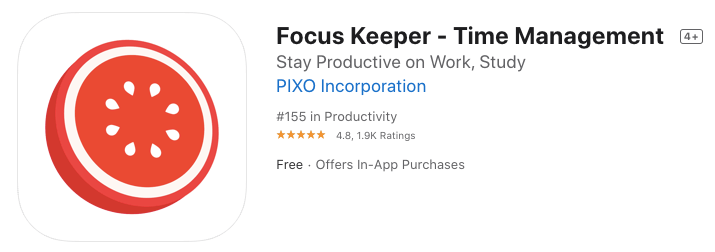
I did a bit of research and found a few Apple Apps that use Pomodoro Method:
Be Focused: https://apps.apple.com/ca/app/be-focused-focus-timer/id973134470?mt=12
Focus Keeper – Time Management (uses a tomato cut in half as a nod to Pomodoro) https://apps.apple.com/ca/app/focus-keeper-time-management/id867374917
Source 3: Journal article “Preference for multitasking, technological dependency, student metacognition, & pervasive technology use: An experimental intervention” by Colin A. Terry, Punya Mishra, and Cary J. Roseth from Computers in Human Behaviour, Vol. 65
This article by Colin A. Terry, Punya Mishra, and Cary J. Roseth looks at the role of student metacognition in abating the negative effects of multitasking and ubiquitous technology-use. The authors note that “[e]ducators are consistently witnessing and combatting student technology-enabled multi-tasking and misuse. Yet, there exist critical research gaps related to how educators may appropriately address and potentially mitigate this problematic and pervasive phenomenon” (241-2). To address these issues, the authors considered the attitudes of students towards multitasking and aimed to “practically advance the burgeoning body of literature towards applicable considerations focused on individual multitasking behavior and subsequent educational responses” (242). Practical applications for student management of their seemingly endless tasks is of great importance to me as an educator.
It examines the neurological basis for multitasking and the areas of the brain triggered and affected by multitasking. The article acknowledges that the “foremost concern with pervasive student multitasking is more directly related to the negative performance implications” (243). They cite various studies on the connection between metacognition and self-regulation of technology, and conclude that “[e]mpowering older students to regulate their behavior and utilize their mental faculties – harkening the relevance of self-regulation and metacognition – has amassed the most conjectured confidence in extant research” (243).
The bulk of the article looks at the procedures used for experimentation, the experiment itself, and the results. The main focus of the study is to look at “the potential empirical relationship(s) between attitude, technology use, preference for multitasking, and metacognitive awareness” (243), and to better understand if there is truly a correlation between metacognition and the ability to pacify undesirable media multitasking. They used the “Media and Technology Usage and Attitudes Scale (MTUAS), a measure to capture self-reported frequency rather than self-reported time for multitasking” developed by Rosen, Whaling, Carrier, et al. (2013), in addition to the “Motivated Strategies for Learning Questionnaire (MSLQ) (Pintrich, Smith, Garcia, & McKeachie, 1991)” (243-4).
In addition, they included five questions to examine multitasking habits:
- Do you believe personal technology (laptops, cell phones, etc.) generally hurts or generally supports your work as a student? Please explain.
- Do you often multitask during school activities (in class, while studying, doing homework)? If yes, why? If no, why?
- Do you often feel distracted doing school work? If yes, what distracts you? If no, what helps you keep focus?
- Did your multitasking behavior or use of technology change since completing this same survey over a week ago? If yes, how?
- You received many texts over the past week. Did these texts change your behavior or thinking? If yes, please explain. If no, please explain. (244)
These are excellent questions to determine student attitudes towards technology, distraction, and multitasking, and would be a great tool to use in the high school classroom in a discussion of metacognition and media balance.
In Parts 4 and 5 of the article, the authors outline “Experimental intervention: results and discussion” and “Conclusions and limitations” respectively (247-9). I will spend more time examining these as we move forward in our learning and inquiry, and consider how these results may impact media literacy education in the classroom.
Conclusion
Given how we are so dependant on technology to socialize and work, it is beneficial to all ages and disciplines to understand the impacts of multitasking and distractions on our productivity, and find ways to counter the negative effects on our brains. By working closely with students, negotiating with them and encouraging them to evaluate their own learning habits, we can help them overcome the more significant challenges of remote and digital learning.
Works Cited
Cirillo, Francesco. “The Pomodoro Technique.” Francesco Cirillo: Work Smarter,
Not Harder, Cirillo Consulting, francescocirillo.com/pages/
pomodoro-technique. Accessed 15 July 2020.
Ruensuk, Mintra. “An implementation to reduce internal/external interruptions in
Agile software development using [the] Pomodoro technique.” 2016 IEEE/ACIS
15th International Conference on Computer and Information Science (ICIS),
25 Aug. 2016, pp. 1-4, DOI:10.1109/ICIS.2016.7550835. Accessed 15 July
2020.
Savitsky, Yana. “How a student changed her study habits by setting goals and managing time.” YouTube, uploaded by TEDx Talks, 30 Apr. 2019, www.youtube.com/watch?v=z7e7gtU3PHY. Accessed 15 July 2020.
Terry, Colin A., et al. “Preference for multitasking, technological dependency,
student metacognition, and pervasive technology use: An experimental
intervention.” Computers in Human Behavior, vol. 65, Dec. 2016, pp. 241-51,
DOI:10.1016/j.chb.2016.08.009. Accessed 15 July 2020.
Ting, Yu-Liang. “Tapping into students’ digital literacy and designing negotiated learning to promote learner autonomy.” The Internet and Higher Education, vol. 26, July 2015, pp. 25-32, doi:10.1016/j.iheduc.2015.04.004. Accessed 15 July 2020.
 LIBE Diploma Blog 2020
You have curated and annotated a strong preliminary list of resources to help you with your inquiry. Your annotations are thorough and thoughtful. I appreciate how you have complimented the academic research with a few non-traditional sources (TED Talks, Apps). Going forward you may want to see if you can find a few more of these, perhaps a blog or a website with practical strategies. You may also want to start and end your blog posts with a little narrative that reminds the reader of your context and purpose. The hope is to draw them into your work and keep them coming back to follow your journey. Overall, you have such a strong foundation here for further work. I look forward to seeing where this takes you.
LikeLike